Reaching and rolling: new skills, new safety checks
Play & development
Reaching and rolling: new skills, new safety checks
Sources checked · Editorial guide
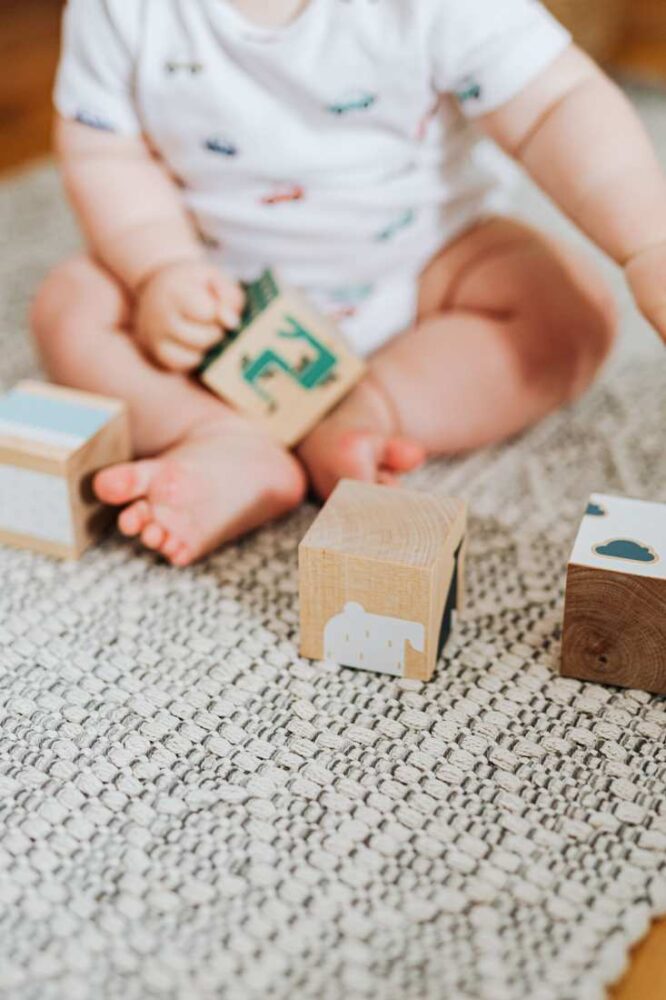
A baby may reach a little farther or roll at a moment when you did not expect it. New movement skills are exciting, but they also change what can be reached and which equipment remains suitable. This guide focuses on noticing those changes and making practical adjustments without turning development into a competition.
Use milestones as conversation starters
The Canadian Paediatric Society describes development as skills emerging over time across movement, communication, thinking and social interaction. In early infancy, head control, reaching and rolling are examples to discuss with the care team. An age chart cannot assess an individual baby or explain why a movement is difficult. [1]
Observe what happens in everyday care and play. Does the baby turn towards an interesting sound, reach for an object or seem uncomfortable in a position? Write a concrete example if you have a question. You do not have to decide whether it meets a milestone definition before asking for help.
Avoid repeatedly placing a baby in a difficult position to obtain a photograph or prove a skill. A natural observation is enough to start a professional conversation. If the baby has a medical or developmental plan, follow the individual guidance rather than a generic activity list.
Make the floor the place to explore
The Canadian Paediatric Society encourages active opportunities throughout the day, including supervised floor-based play. Give a baby suitable chances to reach, move and practise rather than spending long waking periods restrained in equipment. Activities should fit the baby’s comfort, skills and medical needs. [2]
Clear one usable space and inspect it before each session. Check for small items, cords and objects left by an older child. Stay close and let the baby explore without a complicated arrangement of toys. A clean, safe area you can use regularly is more valuable than equipment that is difficult to set up.
Try offering one suitable object and then waiting. Describe what the baby does rather than moving the toy constantly to make a result happen. If the baby turns away, becomes distressed or needs a feed, attend to that need and try another time.
Keep awake play separate from sleep advice
Supervised tummy time while awake supports movement and reduces prolonged pressure on one part of the head. The Canadian Paediatric Society advises speaking with the baby’s doctor about a persistent flat area or concerns. Do not change the recommended back-sleeping position or add a pillow or positioner to try to reshape the head. [3]
If tummy time is difficult, ask a qualified professional to demonstrate suitable positions or adaptations. Describe whether the baby seems uncomfortable, prefers one side or quickly becomes upset. A useful question is: “What should we try, and when should we ask for another assessment?”
Keep the play invitation short and responsive. You do not need to force a long session to meet a number in an app. Agree with the care team how to build opportunities appropriately if there are concerns about tolerance or movement.
Review sleep equipment when skills change
Health Canada advises changes when babies roll or push up: stop swaddling when rolling starts, move beyond a bassinet when appropriate, and make further crib adjustments as development progresses. Follow the product’s own limits too. A manufacturer’s age estimate does not override an earlier movement or size limit. [4]
Find the manual now and highlight the triggers for changing the setup. Write down who will make a mattress adjustment or assemble the next suitable sleep space. Do not wait until a baby is already trying something beyond the equipment’s permitted use.
Recheck reachable cords and objects from the baby’s new position. Something that was out of reach while lying still may no longer be out of reach during rolling or pushing up. Include the space beside the crib, not only what is inside it.
Reconsider changing and seating routines
Before a change, gather supplies and keep a hand and attention on the baby as appropriate for the setup. If you need to step away, take the baby with you or place them in a safe place. Do not assume a baby will remain where you left them because they did yesterday.
For seats, bouncers and other equipment, check the actual instructions for developmental and size limits. Look for damage and missing parts. A useful product record includes the model, manual and the condition that means you stop using it. Share that record with regular caregivers.
Make observations useful for a checkup
Choose two or three examples rather than a long scorecard. Include when a movement happens, whether the baby seems comfortable and whether both sides are used similarly. Ask the provider whether a brief private video would help explain a concern and how to share it securely.
Raise loss of a previously used skill or another worrying change promptly. HealthLink BC advises addressing a loss of abilities at any age immediately. Variation between babies is not a reason to ignore a concern. [5]
Your new-skill reset
- Clear a safe supervised floor-play space.
- Check sleep, seating and changing equipment instructions.
- Act on movement and size limits when they occur.
- Remove newly reachable hazards.
- Share changes with every caregiver.
- Bring specific questions about comfort or movement to the care team.
The useful goal is opportunity and safety around the baby you have today. There is no need to buy a device that promises to accelerate the next milestone.
Sources and further reading
Our practical examples and planning tools are original editorial suggestions. Health and safety points are linked to the Canadian sources below. Checked October 20, 2026; this article has not been medically reviewed.
General education for parents and caregivers. These guides do not assess your child or replace care from a qualified professional. For advice about your pregnancy or child, contact your care team.
Stay a little longer
More for this chapter.
Play & development
Everyday floor play without a pile of toys
Simple, supervised play gives your baby time to explore with you nearby.

Feeding
Before solids: prepare without rushing
Learn what readiness can look like and make a plan with your care team.

Safety
Baby carriers: fit, breathing and a practical first outing
Check the baby’s fit, your comfort and the instructions before relying on a carrier.