Everyday floor play without a pile of toys
Play & development
Everyday floor play without a pile of toys
Sources checked · Editorial guide
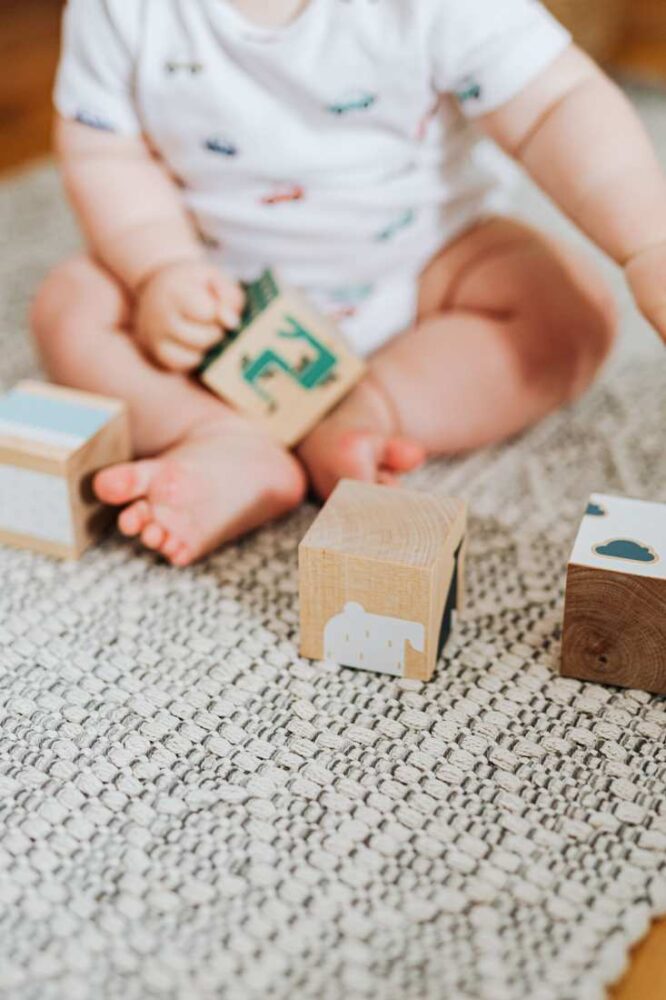
At three to six months, play can fit into the space between everyday care. A clear patch of floor, your attention and one or two suitable objects can provide plenty to explore. You do not need to fill every waking minute or turn each activity into a lesson. Use the ideas here as invitations, and stop when your baby has had enough.
Set up one useful play space
Choose a clean, safe floor area where you can stay close and supervise. Remove small objects, cords and anything an older child might have left behind. Keep pets and busy foot traffic away from the space. Put the items you need within your own reach so you are not repeatedly leaving to find a toy or cloth.
Start with one or two sturdy, age-appropriate toys rather than a full basket. The Canadian Paediatric Society suggests simple items such as an easy-to-grasp rattle and opportunities to look, reach and explore. Check toys for loose parts, sharp damage, cords and pieces that could go in a baby’s mouth. Follow the age and safety information on the actual product. [1]
For a small home, a portable container for a few suitable toys may be more practical than a dedicated playroom. Keep the floor space useful for other family activities when play finishes. If you borrow toys, inspect and clean them according to their instructions before introducing them.
Use several short invitations
Canadian movement guidance encourages active, interactive floor play throughout the day. For babies who are not yet mobile, it includes at least 30 minutes of awake tummy time spread across the day. Build opportunities gradually and adapt them with your baby’s health professional if there are medical or developmental needs. Tummy time is supervised awake play, not a sleep position. [2]
You can place invitations around routines instead of setting a rigid timetable. For example, after a change and while your baby is comfortable and alert, sit beside the play space and offer a short opportunity. Later, another caregiver can try a different activity. If the timing is awkward, change it rather than trying to “catch up” with one long session.
Keep a simple mental note: was the baby interested, what seemed comfortable and when did they want a break? Those observations help you choose the next invitation. There is no need to count every reach or compare a day’s play with somebody else’s social feed.
Try a look-and-reach game
Sit close while your baby lies on their back in the supervised play area. Offer one appropriate object where they can notice it. Describe it in a few ordinary words, then pause. If they reach or bat towards it, let the moment unfold rather than repeatedly moving the object away.
For example, you could say, “Here is your blue rattle. You touched it.” If your baby looks away, let that be a pause rather than trying to regain their attention with several louder toys. An adult can participate without controlling every movement.
Use the same toy again another day before deciding it is boring. You can change your position or the words you use, while keeping the activity familiar. This also makes it easier to notice what your baby chooses to explore.
Add faces, sounds and a small conversation
HealthLink BC suggests responding to early smiles and sounds, singing, sharing books and offering supervised sensory play. Follow the baby’s interest, mix quieter and more active moments and take a break when they seem tired, hungry, uninterested or overstimulated. Expensive equipment is not required. [3]
Try a “your turn, my turn” moment: make a gentle sound, pause and notice whether your baby looks, moves or makes a sound back. Respond to what they actually do. A conversation at this age does not need spoken words, a perfect song or a particular result.
A board book can also become a brief shared moment. Show one picture, talk about it and stop when the baby loses interest. If an older sibling wants to help, give them a specific job such as choosing between two suitable books while you remain responsible for supervision.
Make tummy-time questions practical
If tummy time feels difficult, write down what happens rather than forcing longer sessions. Does the baby become upset immediately? Is one position noticeably harder? Can you get comfortably down beside them? Bring those observations to a health professional and ask for a demonstration of suitable positions or adaptations.
A useful appointment question is: “Can you show me a way to support play that fits my baby’s needs?” Ask what discomfort or movement pattern should prompt another assessment. Avoid buying a positioning device because an advertisement promises it will make a milestone happen faster.
Keep a low-cost play plan
- Keep one safe area ready and easy to clear.
- Offer one object or interaction at a time.
- Include short awake floor-play opportunities across the day.
- Let different caregivers share a familiar game or song.
- Inspect toys again as they wear or new movement skills appear.
- Note concerns for a provider rather than treating play as a test.
When to ask for guidance
You can raise questions about comfort, movement, hearing, vision or engagement at a routine appointment, or sooner if you are concerned. Describe what you notice and, if appropriate, ask whether a brief private video would help the provider understand. You do not need to wait until a milestone chart says your baby is late.
The useful measure of a play setup is whether you can use it safely and comfortably in real life. A simple space you return to often is worth more than a room full of equipment that is difficult to maintain.
Sources and further reading
Our practical examples and planning tools are original editorial suggestions. Health and safety points are linked to the Canadian sources below. Checked October 20, 2026; this article has not been medically reviewed.
General education for parents and caregivers. These guides do not assess your child or replace care from a qualified professional. For advice about your pregnancy or child, contact your care team.
Stay a little longer
More for this chapter.

Feeding
Before solids: prepare without rushing
Learn what readiness can look like and make a plan with your care team.

Safety
Baby carriers: fit, breathing and a practical first outing
Check the baby’s fit, your comfort and the instructions before relying on a carrier.

Everyday care
Baby vaccinations: prepare, comfort and follow up
Keep the record current and make the visit easier for both baby and caregiver.