Little kitchen helpers: food skills and family meals
Feeding
Little kitchen helpers: food skills and family meals
Sources checked · Editorial guide
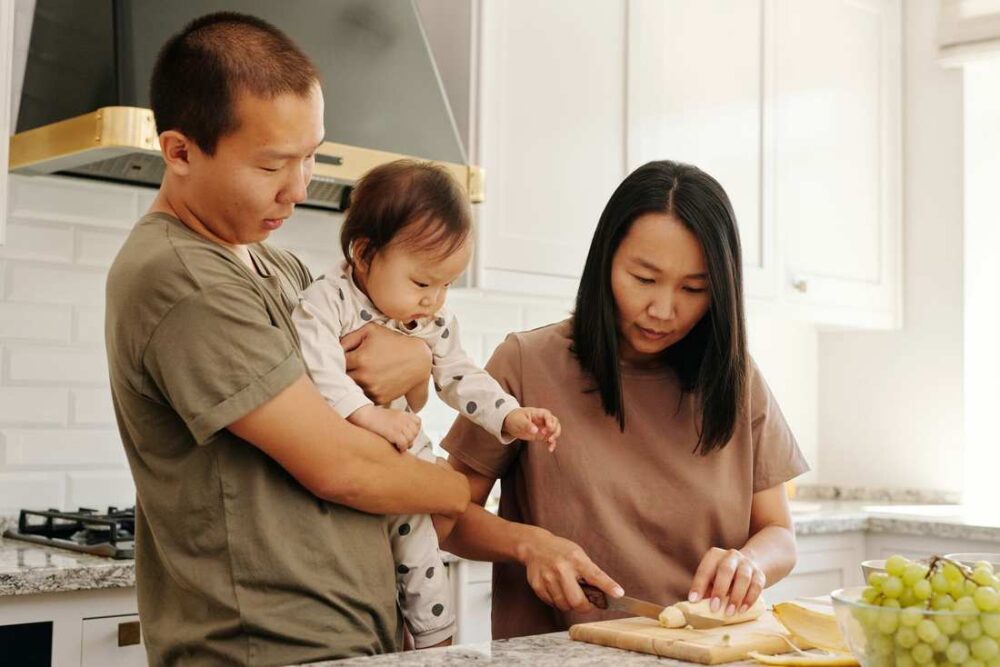
A preschooler can be interested in washing a vegetable one day and refuse to taste it the next. Involving children with food is about experience, conversation and useful household skills, not a contract that they must eat whatever they helped make. This guide gives you ways to include a young helper without making dinner much more complicated or buying a special kitchen set.
Start with one task you can supervise
Choose a small task suited to your child and the space: placing napkins, stirring a cool mixture while you assist or sorting ingredients you have checked are suitable to handle. An adult remains responsible for safety and the meal. Participation does not mean working independently beside heat or sharp equipment.
Prepare the work area before inviting the child. Move dangerous tools, hot liquids and raw animal foods out of their activity. Pick a stable arrangement that allows you to supervise closely, and follow any equipment’s instructions. Do not improvise a raised platform or assume a product marketed for toddlers removes fall risk.
Tell the child exactly what they may do and what stays with the adult. If you cannot supervise that task while cooking, choose a different time or a different task. Helping set the table can be a useful contribution too.
Let shopping become a conversation
Before leaving, identify one manageable choice, such as two suitable vegetables the household can use. Explain which part the child may decide. Adults still manage allergies, nutrition, the budget and the rest of the list.
Talk about colour, shape or where a food goes in a meal. You do not have to turn the aisle into a lesson or ask the child to name every item. If shopping is rushed, invite them to help unpack later instead.
Keep food preferences separate from moral labels. A child who dislikes a food is not bad, and liking a vegetable does not make them a better child. Use ordinary descriptions of ingredients and what your family is preparing.
Offer structure without controlling every bite
CPS recommends regular meals and snacks with a variety of vegetables and fruit, whole grains and protein foods. Adults choose what is offered and the eating routine; children choose how much to eat from what is provided. Include age-appropriate food preparation and self-feeding while keeping the overall atmosphere supportive. [1]
Look at the day’s practical routine. If everyone arrives home hungry at different times, decide how snacks and dinner will work rather than repeatedly negotiating in front of an open fridge. Share the arrangement with caregivers so the child is not receiving contradictory expectations.
You can serve a small initial portion and offer more. Avoid turning a particular number of bites into the goal of the meal. If the child follows an individual medical or nutrition plan, use professional advice to adapt these general suggestions.
Make food exploration pressure-free
CPS notes that pressure, threats, bribes and punishment can increase resistance to eating. Keep offering variety and include familiar food alongside new choices. A child may need repeated opportunities to become comfortable with a taste or texture; helping prepare something does not oblige them to eat it. [2]
Describe what you notice without demanding a performance: “That carrot is crunchy” or “This one is warm.” A child may look, smell or help serve and choose not to taste. Keep the meal moving rather than making everyone watch the decision.
If you are frustrated by waste, offer less at first and store unserved food safely. Do not pressure the child to finish because the ingredients were expensive or because someone spent time cooking. Discuss a practical shopping adjustment with the adults afterwards.
Adapt foods for the child, not the photograph
CPS highlights the size, shape and texture of foods as choking considerations. Whole grapes, hot dogs, raw carrots, nuts and popcorn are examples requiring particular caution or avoidance for young children. Serve appropriate preparations, keep children seated and supervise eating. A food does not become safe simply because it appears in a preschool lunch photo. [3]
Before serving a family dish, consider the individual components and the child’s chewing skills. Remove unsuitable parts and change preparation as needed. Ask a qualified professional if your child has swallowing difficulties or you are unsure how to adapt a food safely.
Keep cooking participation and eating separate when the task involves handling ingredients not ready to eat. Explain that some things are for preparation and others are for tasting. An adult should control raw ingredients and cleaning so a child is not expected to judge food safety.
Share family food traditions
Invite relatives to describe a familiar dish, name an ingredient in their language or explain how the household usually serves it. Adapt the child’s task rather than replacing every family meal with a baby-branded version.
Ask the child which small job they enjoyed and repeat it if practical. You do not need a photograph or finished craft-like result to prove learning occurred. A spilled spoonful can be part of a manageable task if the adult has planned for cleanup.
Get help for persistent difficulty
Seek professional advice about pain, choking, persistent coughing with meals, growth concerns, a very restricted range of foods or significant distress. Bring an ordinary food record and examples of what happens. Do not assume every difficulty is ordinary pickiness or start multiple supplements without review.
A simple meal to try together
Choose one familiar family meal, one supervised preparation task and one suitable new component alongside familiar food. Set out what you need, keep the child’s role clear and allow them to decide how much to eat. The success is a workable experience together, not an empty plate.
Sources and further reading
Our practical examples and planning tools are original editorial suggestions. Health and safety points are linked to the Canadian sources below. Checked October 20, 2026; this article has not been medically reviewed.
General education for parents and caregivers. These guides do not assess your child or replace care from a qualified professional. For advice about your pregnancy or child, contact your care team.
Stay a little longer
More for this chapter.

Everyday care
Toilet learning at your child’s pace
Look for readiness and make practice comfortable, calm and pressure-free.

Play & development
A day with room to move, rest and play
Make space for activity and rest, with different sleep needs at two and at three to four.
Play & development
First friendships: play, turns and room for feelings
Set up manageable playtimes and coach the moments children cannot yet solve alone.