Starting preschool: routines, goodbyes and working with educators
Parent wellbeing
Starting preschool: routines, goodbyes and working with educators
Sources checked · Editorial guide

Starting preschool or moving to a new childcare room changes more than the drop-off location. Your child may be meeting new adults, eating in a group and learning a different bathroom routine. You may be fitting collection around work or another child’s schedule. This guide helps you organise the practical details and build a useful relationship with the people providing care.
Find out what the setting actually expects
Ask for the daily routine, arrival and collection procedures, clothing needs, food arrangements and illness policy. Confirm which supplies are provided before buying a large preschool kit. Read the service’s own information rather than relying on a checklist from a different province or programme.
Ask how children are supported with toileting, communication, rest and emotions. Describe your child’s current needs accurately. If they need help with a task, say so; pretending they are already independent makes it harder for staff to plan suitable support.
Discuss any disability, health condition, allergy or individual care plan with the appropriate staff. Ask how information is kept private and who needs access. Arrange professional instructions and required forms ahead of time rather than placing an important medical note loose in a backpack on the first day.
Make the new place familiar
HealthLink BC suggests talking about what will happen, visiting when possible and introducing a new care routine gradually where arrangements allow. Explain that you will return. A preschooler may understand a concrete sequence better than an abstract number of hours. Ask the service what settling-in approach it can actually offer. [1]
Look at photographs supplied by the setting or walk the route together. Use ordinary descriptions: where coats go, who helps with washing hands and where you will meet at pickup. Avoid promising a particular friend or activity that staff have not confirmed.
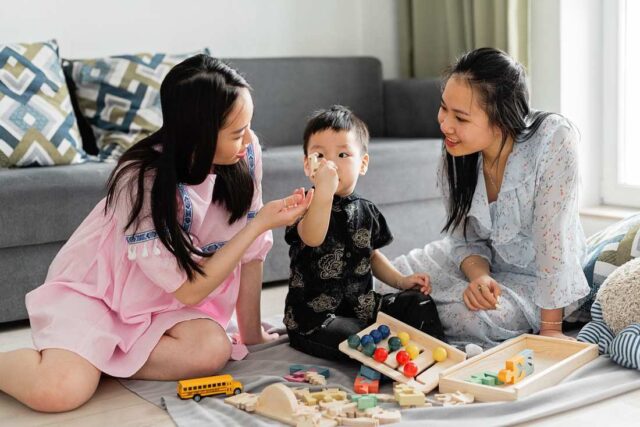
At home, use play to explore the routine if your child is interested. A toy can arrive, hang up its coat and be collected later. Keep the activity brief and flexible; it should not become a rehearsal the child must perform correctly to be allowed to attend.
Prepare a small arrival routine
Decide who will bring the child, how belongings are stored and which adult receives them. Use a short goodbye phrase and follow the setting’s handover process. Tell staff if another person will collect the child and follow the required authorisation procedure.
Pack together when it is useful. Your child might choose between two suitable shirts or help put a spare outfit into the bag. Adults remain responsible for checking essential items. A young child should not carry the blame for a forgotten medication form or missing emergency contact.
Leave enough time to complete the handover without a long negotiation at the door. If mornings repeatedly become rushed, move one adult task to the evening or change who packs. The child’s emotions are not the only part of the routine that can be adjusted.
Keep the goodbye warm and clear
CPS recommends a warm goodbye without repeated departures and returns when supporting a child with separation worries. Discuss persistent, intense distress or avoidance that interferes with daily life with a health professional. A familiar routine and caring response matter; dismissing fear or making jokes about it is not helpful. [2]
You can say, “You wish I could stay. Alex will help you now. I will collect you after the afternoon play.” Adapt the reference to the real schedule. Do not sneak out while promising to remain, or guarantee that you will return in five minutes when that is not true.
Agree with educators how they will update you and when they will call if the child cannot settle or something concerns them. Ask what happened after departure rather than assessing the entire day from the doorway moment.
Review eating, rest and bathroom support
Ask staff which parts of the routine are difficult and what help is offered. A child may use different words for the bathroom, need assistance with clothing or find a noisy meal space unfamiliar. Share useful phrases and practical information instead of assuming staff will infer the meaning.
Keep clothing manageable for the child and adults helping them. Follow the service’s safety rules and weather requirements. Label belongings as requested while avoiding unnecessary public display of personal information.
If there are repeated accidents, meal concerns or distress at rest time, arrange a separate conversation. Ask for observations, changes already tried and a review date. Do not resolve a continuing care problem only through hurried comments while other families wait.
Make room for the journey home
Plan collection so the authorised adult knows where to go and what to ask. Allow a quieter transition afterwards when possible. Some children will want to talk; others may prefer a familiar activity before discussing the day.
Try an open invitation rather than a quiz: “I saw the painting table. Did you use it today?” Accept that you may hear only one detail. Ask educators for information you need rather than pressing the child to provide an accurate account of every routine.
Reassess with specific information
Keep a short record if a concern repeats: what happens, where, how often and what support helps. Speak with the service about care quality or safety concerns promptly. Seek health or developmental advice when appropriate rather than assuming every difficulty will disappear with time.
A good start is a relationship among the child, family and educators. It can be adjusted as everyone learns what support is useful.
Sources and further reading
Our practical examples and planning tools are original editorial suggestions. Health and safety points are linked to the Canadian sources below. Checked October 20, 2026; this article has not been medically reviewed.
General education for parents and caregivers. These guides do not assess your child or replace care from a qualified professional. For advice about your pregnancy or child, contact your care team.
Stay a little longer
More for this chapter.

Everyday care
Toilet learning at your child’s pace
Look for readiness and make practice comfortable, calm and pressure-free.

Play & development
A day with room to move, rest and play
Make space for activity and rest, with different sleep needs at two and at three to four.
Play & development
First friendships: play, turns and room for feelings
Set up manageable playtimes and coach the moments children cannot yet solve alone.