Newborn fever and other reasons to get help promptly
Everyday care
Newborn fever and other reasons to get help promptly
Sources checked · Editorial guide
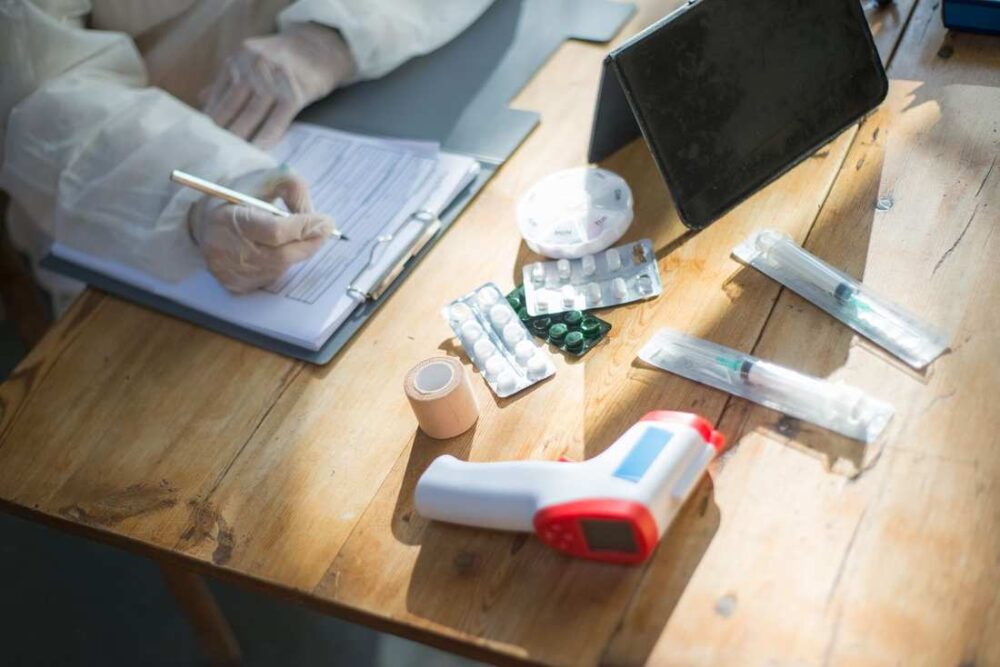
This is a preparation guide, not a symptom checker. If your baby is seriously unwell, seek urgent medical care now. A newborn can need assessment even without a high temperature. Knowing the baby’s exact age, the change you see and where to get help is more useful than trying to diagnose an illness from an article.
Treat fever in a young baby as urgent
The Canadian Paediatric Society advises urgent assessment for a baby younger than three months with fever. A rectal temperature of 38°C or above is a fever. Do not delay medical assessment to see whether medicine, a bath or another feed brings the temperature down. Tell the service the baby’s age and how the temperature was measured. [1]
If you are unsure about a measurement or method, contact a health professional rather than repeatedly trying different devices and choosing the lowest reading. Ask your baby’s provider in advance how they want you to measure temperature and when to call. Keep the thermometer’s instructions with it.
A fever guide for an older child is not automatically appropriate for a newborn. Start a care call with “My baby is this many weeks old” so the person advising you has the most important context immediately.
Look beyond the thermometer
The Canadian Paediatric Society’s RSV guidance describes urgent concerns including difficulty breathing, marked changes in alertness and trouble taking fluids. Breathing difficulty, pauses in breathing, blue or grey colour, or a baby who cannot be roused normally require emergency attention. Do not wait to identify which virus or illness might be responsible. [2]
If you believe there is immediate danger, call emergency services and follow dispatcher instructions. Do not spend time completing a symptom diary or searching for a video that looks similar. If another adult is present, one person can call while the other stays with the baby.
For a less clear but concerning change, contact the baby’s provider or an appropriate urgent-care service promptly. Describe what you see in plain language: “The skin pulls in between the ribs when breathing” is more useful than deciding that it must be a particular infection.
Take feeding and wet-diaper changes seriously
Illness can make feeding difficult and lead to dehydration. Canadian Paediatric Society guidance lists signs such as a dry mouth, reduced urination and unusual sleepiness. In a young baby, contact a professional promptly about poor feeding, vomiting or fewer wet diapers; do not wait for every dehydration sign to appear. [3]
Keep the usual feeding arrangement and any medical instructions available when you call. State what changed, when the baby last fed and what you have noticed about diapers. Do not replace infant feeds with plain water or an improvised drink while waiting for advice.
HealthLink BC explains that vomiting, diarrhea and inability to keep fluids down can become serious in babies. Ask how soon the baby needs to be seen and what to do until assessment. Your child’s provider should guide any individual fluid or feeding treatment. [4]
Make a contact plan before an illness
Save the baby’s usual provider, after-hours service and the route to urgent care in one note. Ask which local advice service is appropriate for the baby’s age. Keep your address and a way to describe your location available for an emergency call, including when visiting relatives.
Check practical details: transport, who can care for an older child and where health documents are kept. A support person can manage bags or arrange a ride while you focus on the baby. Keep the plan realistic for times when only one adult is home.
If your usual clinic cannot be reached, do not treat that as a reason to wait when there is an urgent concern. Use the appropriate urgent route. If advice depends on a change you cannot confidently assess, say so and ask for clarification.
Give a clear account when you call
Prepare a short sequence: exact age, main concern, when it began, current behaviour, temperature and method, recent feeding and diapers, and relevant medical history. Mention prematurity or an existing condition early. Give the actual product and amount if a medicine has already been given; do not guess the name from the colour of the bottle.
Ask the person advising you to repeat the next step: where to go, how soon and what change means emergency help. Write the instruction down if you can. If it does not fit what you are seeing, explain that rather than ending the call with unresolved uncertainty.
Use medicines only with appropriate advice
For a newborn, ask a qualified professional before giving a medicine. Product strength, age, weight and the reason for treatment matter. Do not use an older sibling’s dose or alternate medicines based on social-media advice. Keep products securely stored and bring the packaging if the baby needs assessment.
This guide intentionally does not provide a dosing table. Treating a number on a thermometer is not a substitute for assessing why a very young baby is unwell. Ask what the medicine is for and whether assessment should happen first.
Your ready-to-use preparation list
- Exact birth date and important care history available.
- Thermometer and instructions accessible.
- Usual and after-hours care contacts saved.
- A realistic transport and household backup plan.
- Agreement that serious breathing or alertness changes mean emergency help.
You do not have to be certain that something is wrong before asking for advice. A clear concern about a young baby deserves a conversation, and urgent symptoms deserve prompt care.
Sources and further reading
Our practical examples and planning tools are original editorial suggestions. Health and safety points are linked to the Canadian sources below. Checked October 20, 2026; this article has not been medically reviewed.
General education for parents and caregivers. These guides do not assess your child or replace care from a qualified professional. For advice about your pregnancy or child, contact your care team.
Stay a little longer
More for this chapter.

Feeding
Getting support with newborn feeding
Find a feeding plan and the right help for your baby and your circumstances.

Sleep
Set up a safer place for every sleep
Start with the sleep surface and keep the space simple.
Everyday care
A calmer newborn bath and clothing routine
Prepare the space, stay hands-on and choose comfortable everyday clothing.